.avif)
A fall in a nursing home can have devastating consequences for an older adult, including broken bones, head injuries, hospitalization, reduced mobility, and a significant loss of independence. While not every fall is preventable, nursing home falls may sometimes occur because a facility failed to properly assess a resident's risks, provide adequate supervision, maintain safe surroundings, or follow an appropriate care plan.
When a resident is seriously injured, families may understandably wonder whether the accident was unavoidable or whether poor care contributed to what happened. In certain circumstances, you may be able to sue a nursing home for a fall if the facility's negligence, neglect, or failure to meet its responsibilities caused or contributed to the resident's injuries.
Understanding how nursing home fall liability works can help families recognize potential neglect, preserve important evidence, and determine whether legal action may be appropriate.
Are Nursing Homes Responsible for Preventing Resident Falls?
Nursing homes are not expected to guarantee that a resident will never fall. Older adults may have medical conditions, mobility limitations, cognitive impairments, medication side effects, or other health issues that naturally increase their risk of falling.
However, nursing homes do have responsibilities related to resident safety and individualized care. Facilities are expected to assess residents' needs and develop care plans based on those assessments. California Department of Public Health materials explain that nursing home resident assessments are used to identify individual healthcare needs and develop an appropriate care plan.
Fall prevention is also an important component of nursing home quality and resident safety. CMS tracks falls resulting in major injury as a nursing home and skilled nursing facility quality measure and recognizes that appropriate accommodations and support can help prevent or reduce falls.
A nursing home may therefore face legal responsibility when staff knew or reasonably should have known that a resident faced a heightened risk of falling but failed to take reasonable measures to reduce that risk.
When Is a Nursing Home Fall Considered Negligence?
Determining whether a nursing home was negligent generally requires looking beyond the fact that a fall occurred. The key question is often whether the facility's actions or failures contributed to the accident and resulting injury.
A nursing home fall could potentially indicate negligence or neglect when the facility:
- Failed to properly evaluate a resident's fall risk
- Ignored a known history of previous falls
- Failed to follow the resident's care plan
- Did not provide necessary supervision
- Failed to assist a resident with walking or transferring
- Left a resident unattended when assistance was required
- Failed to respond to call lights within a reasonable amount of time
- Allowed hazardous conditions to remain in hallways, bedrooms, or bathrooms
- Failed to provide appropriate mobility assistance or equipment
- Did not respond appropriately after an earlier fall
- Failed to reassess a resident after a significant change in health or mobility
- Provided inadequate staffing to safely care for residents
Whether these circumstances create legal liability depends on the facts of the particular case, the resident's medical needs, the facility's knowledge, and the connection between the facility's conduct and the injury.
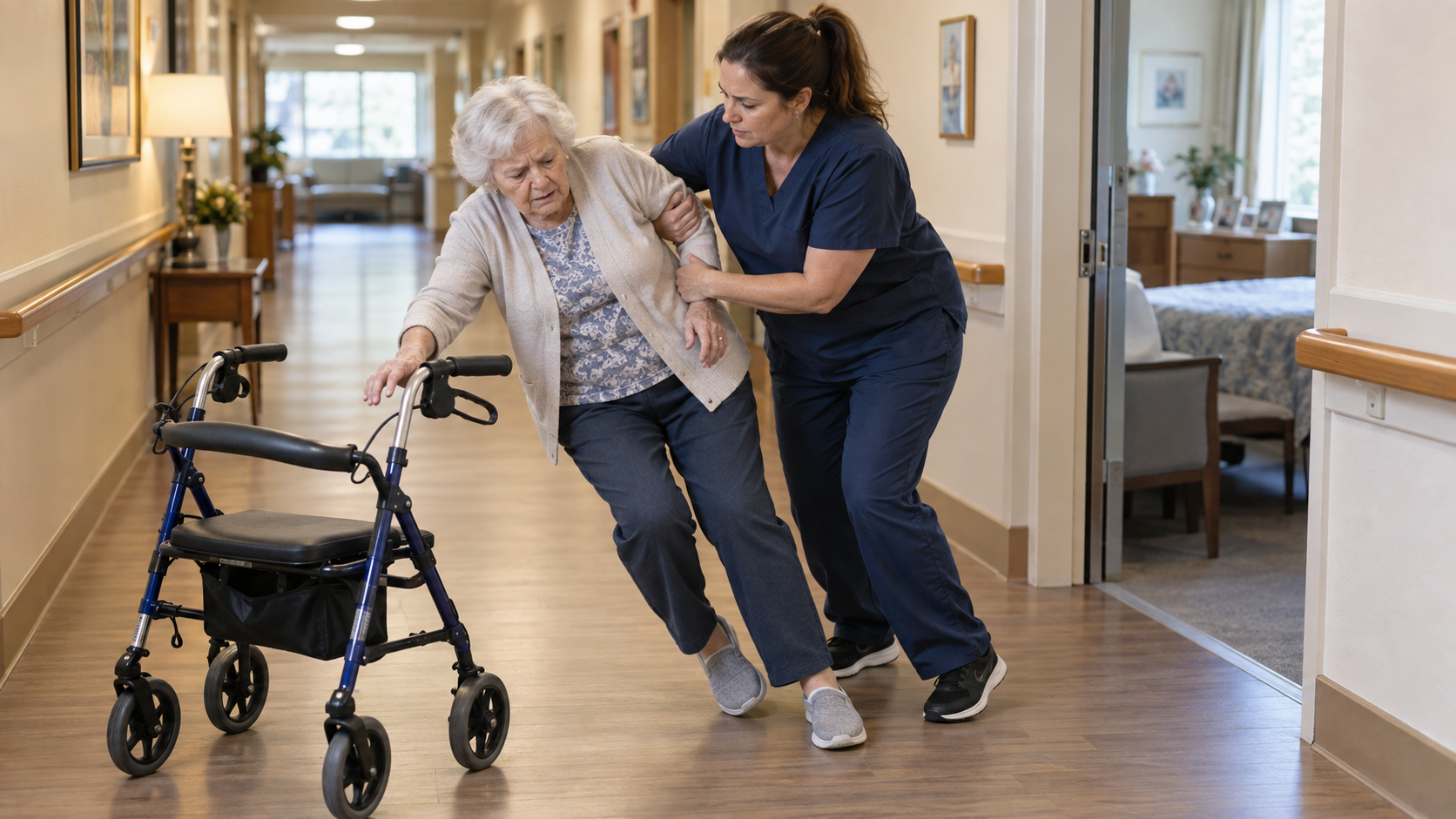
Common Causes of Preventable Nursing Home Falls
Many nursing home residents are already vulnerable to falls. That makes identifying risks and consistently following appropriate precautions especially important.
CMS guidance has recognized both medical and environmental factors that can contribute to falls and emphasizes evaluating fall risks so appropriate interventions can be incorporated into resident care.
Some potentially preventable causes of nursing home falls include the following.
Inadequate Supervision
Residents with dementia, weakness, poor balance, or a history of falling may require additional assistance when getting out of bed, walking, toileting, or transferring between a wheelchair and another surface.
If staff members leave a high-risk resident alone despite knowing that assistance is required, a resulting fall may raise questions about whether the resident received adequate supervision.
Understaffing
Safe resident care depends on having enough qualified staff available to respond to residents' needs. When staffing is inadequate, residents may wait too long for help using the bathroom, getting out of bed, or moving around the facility.
A resident who attempts to move independently after repeatedly receiving no assistance could suffer a preventable fall.
Failure to Follow a Fall Prevention Care Plan
When a resident is identified as being at risk for falls, the facility may implement individualized interventions designed to reduce that risk. Depending on the resident, precautions may involve increased supervision, mobility assistance, environmental changes, appropriate footwear, rehabilitation, or other measures.
California public-health materials concerning resident-centered fall management discuss interventions such as balance training, rearranging furniture, improving footwear, adjusting lighting, and evaluating medications associated with increased fall risk.
Creating precautions on paper is not enough. Staff must consistently implement the measures that are appropriate for the resident.
Unsafe Floors and Walkways
Environmental hazards can also cause nursing home falls. Examples may include:
- Wet or recently mopped floors
- Poor lighting
- Uneven flooring
- Cluttered walkways
- Loose rugs or mats
- Obstructed hallways
- Missing or unstable handrails
- Improperly maintained bathrooms
- Furniture positioned in unsafe locations
Facilities should identify and address hazards that could reasonably endanger residents.
Improper Transfers
Moving a resident between a bed, wheelchair, toilet, or chair can be dangerous when the resident has limited strength or mobility.
Falls may occur if an employee attempts a transfer without sufficient help, fails to use appropriate transfer equipment, or disregards the resident's documented assistance requirements.
Medication-Related Fall Risks
Certain medications may contribute to dizziness, drowsiness, weakness, or changes in blood pressure that increase fall risk. Medication-related risks can therefore be important when evaluating why a resident suddenly begins falling.
A facility may need to communicate changes in a resident's condition to appropriate healthcare providers and ensure the resident's care plan accounts for known risks.
Failure to Respond After a Previous Fall
A prior fall is an important warning sign.
If a resident falls once, the facility may need to investigate what happened, reassess the resident's risks, and determine whether additional interventions are necessary. CMS materials have long emphasized identifying fall-related problems and implementing interventions intended to prevent additional falls.
Repeated falls can be particularly concerning when there is little evidence that a facility changed its approach after earlier incidents.
Can You Sue a Nursing Home for a Fall?
You may be able to sue a nursing home for a fall when there is evidence that the facility's negligence, neglect, or other wrongful conduct caused or substantially contributed to the resident's injuries.
A successful claim generally requires more than showing that a resident fell while living at the facility. The circumstances surrounding the accident need to be investigated.
Important questions may include:
- Did the resident have a documented history of falls?
- Had the resident been identified as a fall risk?
- What precautions appeared in the resident's care plan?
- Were those precautions actually followed?
- Was the resident supposed to receive assistance?
- Were enough staff members available?
- Did the resident repeatedly ask for help before the fall?
- Was an unsafe condition involved?
- Did staff appropriately respond to previous falls?
- Did the resident's health recently change?
- Was the facility aware of that change?
- What injuries resulted from the fall?
The answers can help establish whether the fall was an unfortunate accident or the result of substandard care.
What Evidence Can Help Establish Liability for Nursing Home Falls?
Evidence can disappear quickly after an accident. Thoroughly documenting what occurred can therefore become extremely important when investigating potential nursing home neglect.
Evidence in a nursing home fall case may include:
- Medical records
- Nursing notes
- The resident's care plan
- Fall-risk assessments
- Incident and accident reports
- Prior fall reports
- Staffing records
- Medication records
- Hospital and emergency room records
- Photographs of injuries
- Photographs of the area where the fall occurred
- Surveillance footage
- Witness statements
- Facility policies and procedures
- Communications between staff members and family
- Records showing changes in the resident's physical or cognitive condition
Patterns can also matter. Multiple earlier falls, repeated unanswered requests for assistance, or consistent failures to implement documented precautions may provide important context when evaluating whether the facility provided appropriate care.
What Injuries Can Result From Nursing Home Falls?
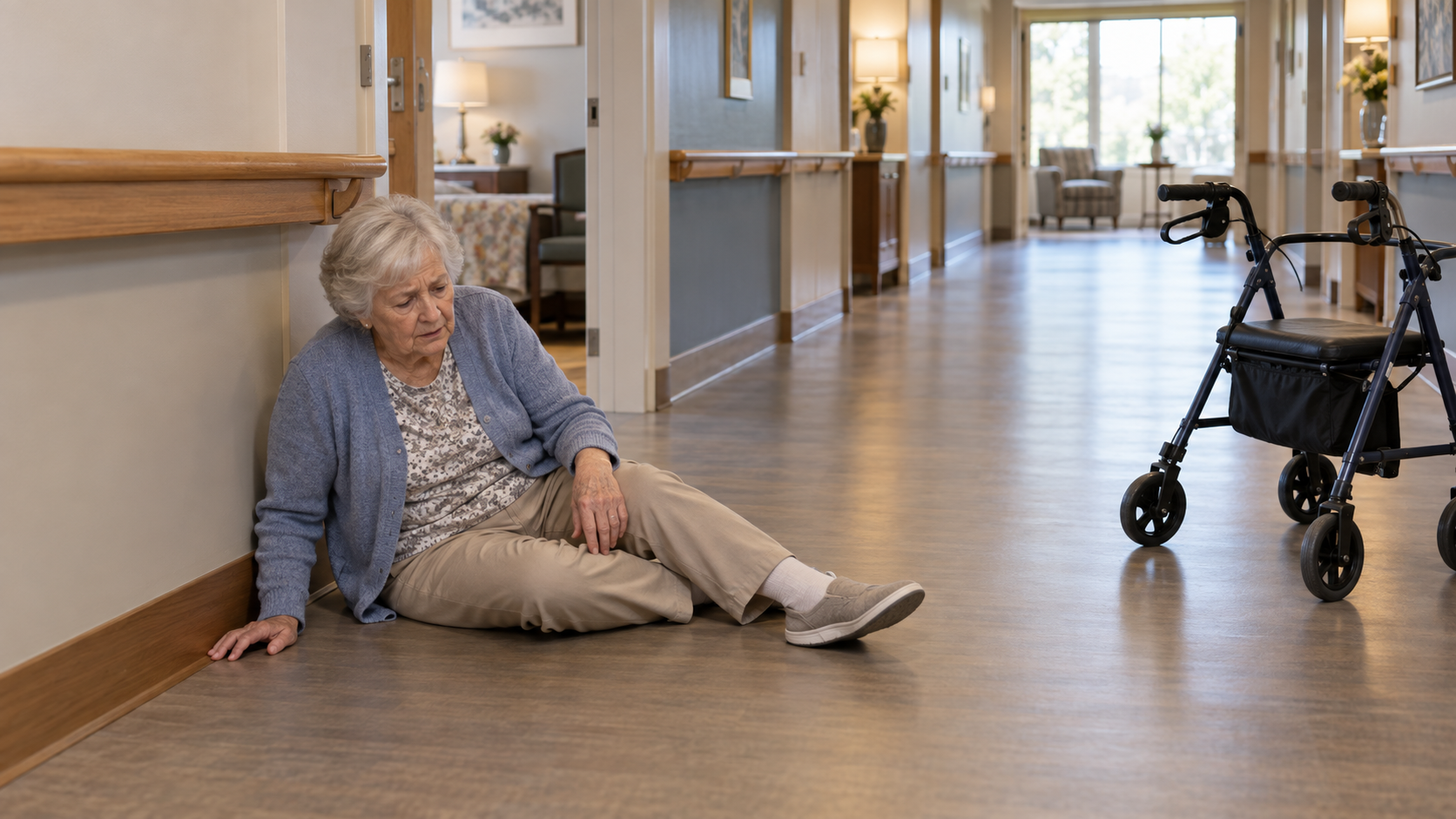
Even a seemingly minor fall can result in a serious injury for an older adult. Age-related changes in bone density, muscle strength, balance, and overall health can make residents particularly susceptible to complications.
Potential injuries include:
- Hip fractures
- Broken wrists or arms
- Leg and ankle fractures
- Head injuries
- Traumatic brain injuries
- Cuts and lacerations
- Shoulder injuries
- Back and spinal injuries
- Internal injuries
- Significant bruising
- Reduced mobility
- Complications requiring hospitalization
The consequences may extend beyond the immediate physical injury. A resident who becomes afraid of falling again may reduce physical activity, potentially contributing to further weakness and loss of independence.
CMS specifically identifies falls resulting in major injuries as an important nursing home quality measure because these incidents can result in new limitations and disability.
What Compensation May Be Available After a Nursing Home Fall?
When a facility is legally responsible for a resident's injuries, compensation may be available for losses resulting from the incident. The specific damages available depend on the circumstances and the legal claims involved.
Potential compensation could include:
- Medical expenses
- Hospitalization costs
- Rehabilitation expenses
- Additional care expenses
- Pain and suffering
- Emotional distress
- Other injury-related losses
- Wrongful death damages when a fall ultimately contributes to a resident's death
California also provides specific protections for elderly and dependent adults through the Elder Abuse and Dependent Adult Civil Protection Act. Depending on the evidence and type of misconduct involved, certain elder abuse or neglect claims can potentially provide remedies beyond those available in an ordinary negligence action.
Because every situation is different, an attorney can evaluate what claims and damages may apply to a particular case.
Is Every Nursing Home Fall Evidence of Abuse or Neglect?
No. A nursing home resident can fall even when staff members have taken reasonable precautions.
The existence of an injury does not automatically establish liability. Instead, an investigation typically focuses on what the facility knew before the accident, what precautions should reasonably have been taken, and whether staff actually followed the resident's care requirements.
For example, a sudden and genuinely unforeseeable medical event might produce a very different legal analysis than a resident falling after staff repeatedly ignored a documented need for assistance.
Families should therefore avoid assuming either that every fall proves neglect or that a facility can never be responsible simply because the resident was already considered a fall risk.
In fact, a known fall risk may make appropriate assessment, monitoring, and intervention especially important.
What Should You Do After a Nursing Home Fall?
The resident's health and immediate safety should come first. Serious injuries may require emergency treatment, hospitalization, diagnostic imaging, or evaluation by an outside physician.
Families should also consider documenting as much information as possible. Helpful steps may include:
- Obtain appropriate medical care. Make sure injuries are evaluated and documented.
- Ask the facility what happened. Request details about where, when, and how the resident fell.
- Photograph visible injuries. Document bruises, cuts, swelling, or other physical harm when appropriate.
- Document the accident location. If possible, preserve evidence of hazardous conditions.
- Write down important details. Record dates, staff names, witness information, and statements made about the incident.
- Preserve communications. Keep relevant emails, text messages, letters, and other correspondence.
- Request relevant records. Medical and facility records may provide important information about the resident's risks and care.
- Consider speaking with a nursing home abuse attorney. An attorney can evaluate whether the circumstances warrant further investigation.
When immediate danger or suspected abuse or neglect exists, families may also need to contact appropriate state or local authorities. Peck Law Corporation identifies the California Department of Public Health and local Long-Term Care Ombudsman programs as potential reporting resources for suspected nursing home abuse or neglect.
How a Nursing Home Fall Attorney Can Help
Nursing home injury cases may involve medical records, state and federal care standards, facility policies, staffing information, and disputes about whether the accident could reasonably have been prevented.
An attorney handling nursing home abuse and neglect claims can help investigate questions such as:
- Whether the facility properly assessed the resident
- Whether staff recognized known fall risks
- Whether the resident's care plan contained appropriate precautions
- Whether those precautions were followed
- Whether staffing contributed to the accident
- Whether the facility violated applicable standards
- Whether prior incidents showed a pattern of inadequate care
- Who may be legally responsible for the resident's injuries
- What compensation may be available
Legal representation can also help families preserve evidence, obtain records, communicate with the facility and its insurers, negotiate a potential resolution, and pursue litigation when necessary.
Speak With Peck Law Corporation About Nursing Home Falls in Southern California
At Peck Law Corporation, we are based in Simi Valley, California, and represent families throughout Southern California in elder abuse, nursing home abuse, nursing home neglect, and other injury-related matters. Our attorneys investigate allegations involving inadequate supervision, unsafe conditions, failures to follow care plans, preventable injuries, and other forms of mistreatment in residential care settings. Peck Law Corporation's nursing home practice specifically focuses on holding facilities accountable when inadequate care harms vulnerable residents.
We handle injury-related cases on a contingency fee basis, which means clients do not pay attorney's fees upfront and our fee is tied to obtaining a recovery. Peck Law Corporation does not handle financial abuse cases. Our elder abuse representation is focused on injury-related cases involving physical abuse, neglect, nursing home abuse, and related harm.
Injured in a Nursing Home Fall? Contact Peck Law Corporation for a Free Legal Consultation
A serious fall should not automatically be dismissed as an unavoidable consequence of aging. When a nursing home knows that a resident is vulnerable to falling, the facility must take the resident's individual needs seriously and provide appropriate care, supervision, and safety measures.
If you suspect inadequate supervision, an unsafe environment, failure to follow a care plan, or another form of neglect caused your loved one's injuries, Peck Law Corporation can help you determine whether you may be able to sue a nursing home for a fall. Contact us today for a free legal consultation. We serve families throughout Southern California and handle injury-related cases on a contingency fee basis, so there are no upfront attorney's fees.
This article provides general information and is not legal advice. Whether a nursing home may be liable for a particular fall depends on the specific facts and applicable law.
Frequently Asked Questions
What are the most common causes of nursing home falls?
Common causes of nursing home falls include inadequate supervision, poor lighting, wet floors, cluttered walkways, improper transfers, medication side effects, and failure to assist residents with mobility. Falls may also occur when staff fail to follow a resident’s fall prevention care plan.
When is a nursing home legally responsible for a resident’s fall?
A nursing home may be legally responsible when negligence, neglect, or unsafe conditions contributed to the fall. This can include failing to supervise a high-risk resident, ignoring known fall risks, or failing to provide necessary assistance or safety measures.
What evidence is important in a nursing home fall lawsuit?
Important evidence may include medical records, care plans, fall-risk assessments, incident reports, nursing notes, staffing records, photographs, surveillance footage, and witness statements. Records of previous falls or complaints can also help establish whether the facility was aware of an ongoing safety problem.
How long do you have to sue a nursing home for a fall?
The deadline to bring a nursing home fall claim can vary depending on the type of claim and the circumstances involved. Because important evidence may also disappear over time, families should consider speaking with an experienced nursing home abuse attorney as soon as possible after a serious injury.
%20(1).avif)