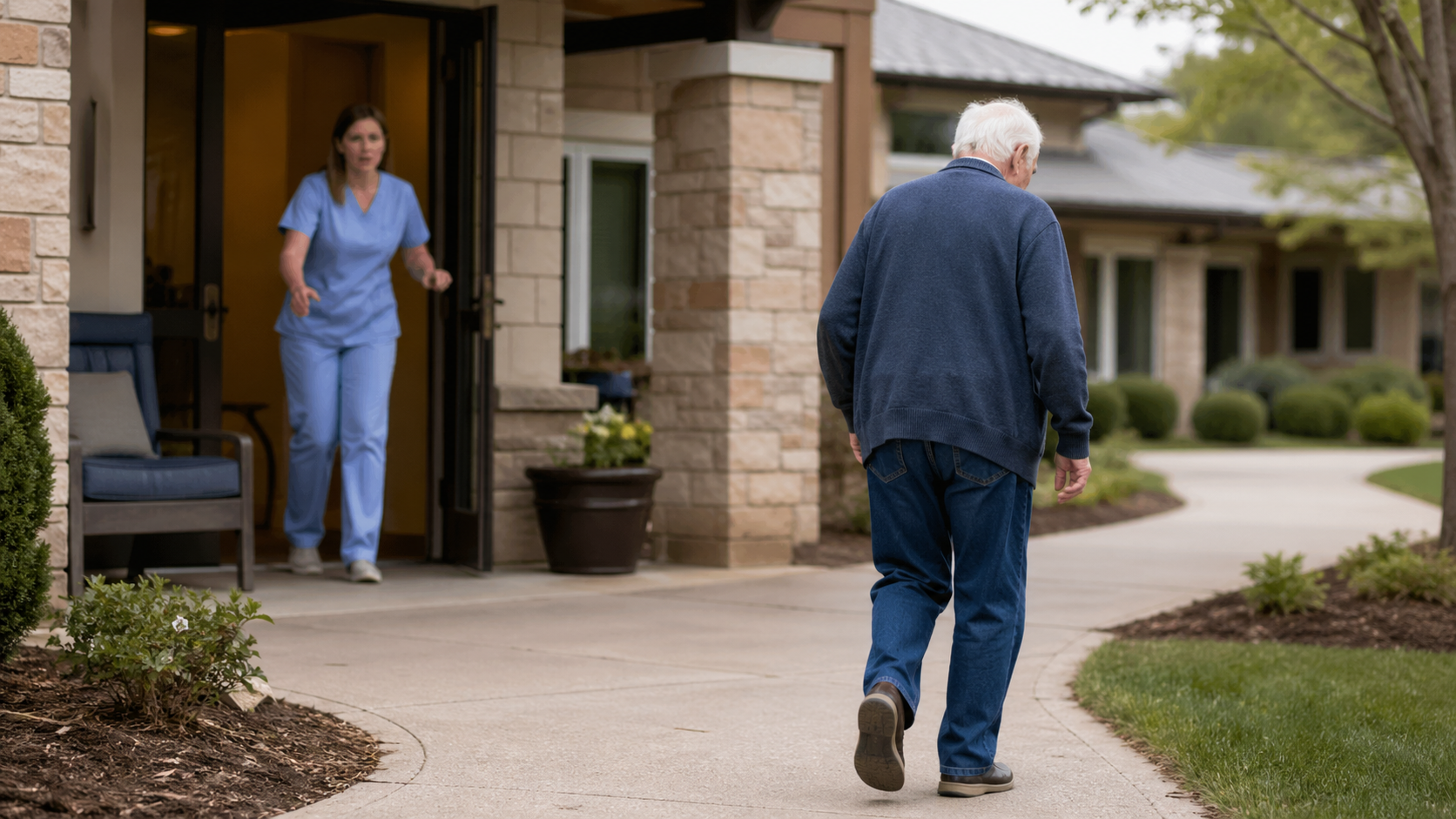
Nursing home elopement is one of the most serious safety failures that can happen in a long-term care setting. When a vulnerable resident leaves a facility without supervision, authorization, or staff knowledge, the consequences can be severe. In many cases, elopement in nursing homes involves residents with dementia, Alzheimer’s disease, or other cognitive impairments that make it difficult for them to recognize danger, find their way back, or ask for help.
Because nursing home residents often depend on staff for supervision, mobility assistance, medication management, and protection, a wandering incident can quickly become a life-threatening emergency. Exposure to traffic, falls, dehydration, extreme temperatures, and delayed medical care are just a few of the dangers. For families, learning that a loved one wandered away from a supposedly secure facility can be devastating. It also raises an important question: could this have been prevented?
What Is Nursing Home Elopement?
Nursing home elopement occurs when a resident exits a facility, unit, or designated safe area without authorization or supervision. Staff may not know the resident is missing until minutes or even hours later. Unlike a planned discharge or an authorized outing, elopement involves a resident leaving without the awareness or approval of caregivers.
Elopement in nursing homes is especially common among residents with conditions that affect memory, orientation, and decision-making. A resident may believe they need to go home, look for a family member, go to work, or respond to confusion caused by dementia. Residents at risk of elopement may also wander due to unmet needs such as boredom, hunger, thirst, or feelings of confinement. Even if the resident appears calm or determined, leaving unsupervised can create severe risks.
In many situations, a nursing home should already know that a resident has a tendency to wander or is at high risk for elopement. When proper precautions are not in place, the consequences can be devastating. Facilities fail when they do not implement proper monitoring and elopement prevention strategies for high risk residents.

Why Elopement in Nursing Homes Is So Dangerous
The danger of elopement in nursing homes cannot be overstated. Many residents are medically fragile, cognitively impaired, or physically unable to protect themselves once they leave the facility grounds.
Even a short period of time without supervision can expose a resident to serious harm, including:
- Falls and fractures
- Traffic accidents
- Wandering into unsafe neighborhoods or remote areas
- Exposure to heat, cold, or rain
- Dehydration or malnutrition
- Missed medications or medical treatment
- Drowning or other environmental hazards
- Assault or exploitation by others
For residents with dementia, the risk is even higher. A person who is confused or disoriented may not be able to identify danger, communicate with first responders, or remember how to return. In tragic cases, nursing home elopement can result in catastrophic injury or death.
Common Causes of Elopement in Nursing Homes
In many cases, elopement in nursing homes results from preventable failures. Long-term care facilities have a duty to protect residents and anticipate foreseeable risks. When they do not, residents can slip through gaps in supervision and security.
Common causes of nursing home elopement include:
- Inadequate Supervision: Residents may be left alone too long, especially during shift changes, meal service, or busy periods.
- Poor Supervision: Inadequate oversight by staff can directly lead to elopement incidents, as residents are not properly monitored.
- Understaffing: When there are not enough trained staff members on duty, facilities may fail to monitor residents properly.
- Broken or Missing Alarms: Door alarms, wander-alert systems, and other security devices may be defective, disabled, or ignored.
- Poor Risk Assessments: A facility may fail to identify that a resident has a history of wandering or a high likelihood of trying to leave.
- Improper Care Planning: Even if a risk is identified, the staff may fail to put appropriate interventions in place.
- Inadequate Training: Staff members may not recognize wandering behavior, respond to warning signs, or follow safety protocols.
- Unsafe Facility Design: Unlocked exits, poor visibility, unsecured courtyards, and weak access controls can increase the chance of elopement.
- Resident's Health Issues: Problems related to a resident's health, such as neglect or insufficient care, can cause residents to attempt to leave unsupervised.
Elopement is often seen as a failure of facility supervision, which can lead to legal and regulatory liability for nursing homes.
When these failures contribute to harm, the incident may point to negligence rather than an unavoidable event.
Which Residents Are Most at Risk?
Not every resident has the same level of risk. Certain individuals are more vulnerable to elopement in nursing homes, especially those who struggle with memory, awareness, or impulse control. Vulnerable residents, particularly those with cognitive or physical impairments, require special attention to ensure their safety and prevent harm.
Residents at higher risk may include those with:
- Dementia or Alzheimer’s disease
- Cognitive decline or memory loss
- A history of wandering
- Confusion, disorientation, or agitation
- Mental health conditions affecting judgment
- Communication limitations
- Recent medication changes
- Poor mobility combined with impaired awareness
Facilities should conduct regular assessments of residents to identify those at high risk for elopement, particularly those with cognitive impairments like dementia.
A nursing facility should assess each resident carefully and identify warning signs. When a resident is known to be at risk, the facility should implement a care plan designed to prevent wandering and elopement.
Preventing Elopement in Nursing Homes
Preventing elopement in nursing homes is essential to protect residents—especially those with Alzheimer’s disease, dementia, or other cognitive impairments—from serious injury or even death. When nursing home elopement occurs, it often means a vulnerable resident has left the healthcare facility unsupervised, putting their health and safety at grave risk. For this reason, nursing homes are legally required to take proactive steps to prevent residents from wandering away.
A key part of prevention is identifying residents who are at high risk for elopement. Nursing home staff must assess risk factors such as cognitive impairment, a history of wandering behavior, or other conditions that increase the likelihood a resident leaves the facility unsupervised. Once high-risk residents are identified, staff members must develop individualized care plans that address each resident’s unique needs and vulnerabilities.
Providing adequate supervision is critical. Staff members should be trained to monitor residents closely, recognize warning signs of wandering, and respond appropriately if a resident attempts to leave. The use of door alarms, secure exits, and other safety measures can help create a secure environment and prevent elopement incidents before they occur. Meaningful activities and engagement can also reduce the urge to wander by keeping residents mentally and physically stimulated.
The Nursing Home Reform Act underscores the obligation of nursing homes to provide a safe environment and quality care for all residents. Facilities are not only ethically but also legally required to implement measures that protect residents from harm, including elopement. This means ensuring proper staff supervision, maintaining working security systems, and updating care plans as residents’ needs change.

Family members play an important role in prevention as well. By staying involved in their loved one’s care, monitoring for changes in behavior, and communicating concerns to nursing home staff, families can help ensure that risk factors are addressed and that their loved one remains safe.
When a nursing home fails to provide adequate supervision and a resident elopes—resulting in serious injury or wrongful death—families may have grounds for legal action. Consulting with an attorney experienced in nursing home neglect can help families understand their rights and options. A free consultation can provide guidance on how to hold the facility accountable and protect other residents from similar harm.
Ultimately, preventing elopement requires a commitment from nursing homes to prioritize resident safety, provide individualized care, and maintain a secure environment. By taking these steps, facilities can reduce the risk of elopement and ensure that nursing home residents receive the protection and dignity they deserve. If you suspect your loved one has been the victim of nursing home neglect or elopement, do not hesitate to seek legal advice—residents have the right to a safe environment, and it is the facility’s responsibility to protect them.
Is Nursing Home Elopement a Form of Neglect?
In many situations, yes. Nursing home elopement is often considered a serious sign of neglect because facilities have a legal duty to protect residents from foreseeable harm. When a resident wanders or elopes, it can be a sign of neglect, and may indicate underlying issues such as emotional distress or inadequate supervision.
Nursing homes and care facilities are generally expected to:
- Assess each resident’s risk of wandering or elopement
- Create and follow an appropriate care plan
- Maintain working alarms and security systems
- Supervise residents based on their needs
- Train staff to respond to elopement risks and emergencies
If a facility knew or should have known that a resident was vulnerable to wandering, then a preventable elopement may be strong evidence of negligence. A resident does not need to disappear for hours or suffer fatal injuries for the event to be serious. Even a short period of unsupervised wandering can expose an elderly resident to major harm.
The emotional distress caused by elopement affects not only residents but also families and staff, leading to panic and fear.
Warning Signs a Facility May Not Be Preventing Elopement Properly
Families should pay attention to signs that a nursing home may be failing to protect residents from wandering incidents. Proper monitoring is essential to keep residents safe and prevent dangerous situations like nursing home elopement.
Potential red flags include:
- Exterior doors left unsecured
- Broken alarms or delayed staff response
- Chronic understaffing
- Residents found wandering unsupervised inside or outside
- Poor communication about care plans
- Staff unfamiliar with a resident’s history of wandering
- Unexplained injuries or prior missing-person incidents
Creating a safe environment for residents includes installing secure doors and windows, using wander management systems, and maintaining clear communication among staff about residents' needs and risks.
If a facility appears disorganized or dismissive about safety concerns, that may signal deeper problems with resident supervision.
Can Families Take Legal Action After Nursing Home Elopement?
When a resident is injured because of nursing home elopement, family members may have legal grounds to pursue a claim against the facility. A lawsuit may help hold the nursing home accountable for failing to protect a vulnerable resident from a foreseeable danger. Many law firms offer a free case review to help families understand their legal options after an elopement incident.
Depending on the facts, a legal claim may involve:
- Negligence
- Elder abuse or neglect
- Failure to supervise
- Inadequate staffing
- Failure to maintain security measures
- Wrongful death, if the elopement resulted in a fatal outcome
Legal action can also help uncover what went wrong. Internal records, staffing logs, alarm maintenance records, care plans, and incident reports may reveal whether the facility failed to meet its obligations. In many cases, elopement in nursing homes raises serious questions about liability and whether better supervision or security could have prevented the harm.
Elopement prevention requires implementing preventive measures such as comprehensive risk assessments, individualized care plans, environmental safeguards, and consistent staff training.
How Peck Law Corporation Helps Families Across Southern California
At Peck Law Corporation, we understand how frightening and heartbreaking nursing home elopement cases can be for families. When a loved one is allowed to wander away from a facility without supervision, it can leave families with painful questions about what went wrong and whether the incident could have been prevented. Our firm helps families pursue answers and accountability when a nursing home or care facility fails to protect a vulnerable resident.
Based in Simi Valley, Peck Law Corporation proudly represents clients throughout Southern California in elder abuse and nursing home abuse cases. We have experience handling claims involving neglect, inadequate supervision, unsafe conditions, and injuries caused by elopement in nursing homes. For all injury-related cases, we work on a contingency fee basis, which means you do not pay attorney fees unless we recover compensation for you.

Contact Peck Law Corporation for a Legal Free Consultation
If your loved one was harmed because of nursing home elopement, you do not have to navigate the situation alone. A preventable wandering incident may be a sign of serious neglect, and legal action may help protect your family’s rights while holding the facility accountable.
Contact Peck Law Corporation today for a free legal consultation. Our team serves families in Simi Valley and throughout Southern California, and we are ready to help you understand your options after an incident involving elopement in nursing homes.
Frequently Asked Questions
What is elopement in a nursing home?
Elopement in a nursing home happens when a resident leaves the facility, unit, or supervised area without staff permission, knowledge, or proper supervision. It is especially dangerous for residents with dementia, Alzheimer’s disease, or other cognitive impairments who may not understand the risks of leaving alone.
Can a nursing home be held liable for elopement?
Yes, a nursing home may be held liable for elopement if its negligence contributed to the resident leaving unsupervised and suffering harm. Liability may arise when the facility failed to provide adequate supervision, maintain security systems, or protect a resident known to be at risk.
What should families do after a nursing home elopement incident?
Families should seek immediate medical attention for the resident, document what happened, and ask the facility for a full explanation of the incident. It is also important to preserve records, take photographs if relevant, and speak with an experienced attorney if negligence may have played a role.
When should I contact a lawyer about elopement in nursing homes?
You should contact a lawyer as soon as possible if your loved one was injured, went missing, or suffered harm because of elopement in a nursing home. An attorney can help investigate the incident, determine whether negligence occurred, and explain your options for pursuing compensation and accountability.
%20(1).avif)