.avif)
When you entrust a nursing home with the care of your loved one, you expect compassion, safety, and professionalism. Unfortunately, nursing home negligence remains a serious issue across California and the United States. Accountability and proper oversight are crucial in all such settings to protect residents from neglect and abuse. If you suspect neglect, you may be wondering how to prove nursing home negligence and what evidence is necessary to hold a facility accountable.
Building a successful claim requires more than suspicion. It demands clear documentation, strong supporting evidence, and a legal strategy that connects the facility’s actions—or inaction—to the harm suffered by vulnerable residents. Below, we explain what nursing home negligence is, the elements required to prove it, and the types of evidence you’ll need to build a strong case.
Example of Nursing Home Negligence
Nursing home negligence occurs when a facility fails to provide the standard of care required to protect residents from harm. Unlike intentional abuse, negligence often involves careless or reckless behavior, such as understaffing, poor supervision, medication errors, or failure to prevent bedsores and falls.
Common examples of nursing home negligence include:
- Untreated bedsores (pressure ulcers)
- Frequent falls due to lack of supervision
- Malnutrition or dehydration
- Medication errors
- Poor hygiene and unsanitary conditions
- Failure to respond to medical emergencies
- Visible injuries such as bruises or bedsores
- Unsafe conditions within the facility
- Weight loss or sudden weight loss
- Administering the wrong medication
Warning signs of nursing home negligence may include sudden weight loss, unexplained injuries or bruises, and poor personal hygiene. Recognizing these warning signs early is crucial for protecting your loved one’s health and safety.
Poor training of staff is a common contributing factor to negligence, leading to errors like giving the wrong medication or missing essential care. Medical malpractice can also occur in nursing homes, such as when healthcare professionals make medication errors or ignore critical symptoms, resulting in harm to residents.
Common outcomes of nursing home neglect include bedsores, infections, broken bones, dehydration, emotional distress, or even wrongful death. Families should act quickly if they notice any warning signs of nursing home negligence.
To pursue legal action, you must demonstrate that the facility’s failure directly caused injury or harm.
The Key Legal Elements: How to Prove Nursing Home Negligence
To understand how to prove nursing home negligence, you must establish four essential legal elements. In addition, you need legal proof to demonstrate that the facility failed to meet its duty of care and that this failure caused your loved one harm. Following the proper legal process is crucial for holding nursing homes accountable and successfully pursuing a claim.
1. Establish the Duty of Care
Nursing homes have a legal obligation to provide residents with a reasonable standard of care, including proper care and proper medical care. This duty arises when the facility agrees to admit and care for the resident.
Evidence of duty of care may include:
- Admission agreements
- Care plans
- Facility policies and procedures
- State and federal regulations governing nursing homes
These documents demonstrate that the facility was legally responsible for your loved one’s safety and well-being.
2. Show That the Facility Breached Its Duty
A breach occurs when the nursing home fails to meet the accepted standard of care. Examples include:
- Ignoring a resident’s care plan
- Failing to reposition a bedbound resident to prevent bedsores
- Inadequate supervision leading to falls
- Understaffing that results in missed medications
- Staff errors caused by poor training
Breaches can also include medical malpractice, such as medication errors or failure to follow accepted medical standards.
Proving a breach often requires comparing what the staff did (or failed to do) against what a reasonably competent facility would have done under similar circumstances.
3. Prove Causation
One of the most important aspects of how to prove nursing home negligence is showing that the facility’s actions directly caused the injury, specifically physical harm such as injuries or visible signs of neglect.
For example:
- If a resident develops severe bedsores, you must show they resulted from neglect—not an unavoidable medical condition.
- If a fall caused a broken hip, you must demonstrate that inadequate supervision or safety measures contributed to the accident.
This is often where expert medical testimony becomes critical.
4. Document Damages
Finally, you must show that the negligence caused actual harm. Damages may include:
- Physical injuries
- Pain and suffering
- Emotional distress
- Medical expenses
- Medical costs (such as hospital bills, medication, and ongoing treatment)
- Rehabilitation costs
- Wrongful death damages (in fatal cases)
Without documented damages, even clear negligence may not result in a successful claim. Be sure to keep records of all medical costs related to the substandard care.
Essential Evidence Needed to Prove Nursing Home Negligence
Building a strong case requires clear, organized documentation. Working with a legal team is crucial, as they can help gather, organize, and present the necessary evidence to support your claim. Evidence from outside the nursing home can also provide an objective perspective on the quality of care. Below is the most important evidence used in nursing home negligence claims.
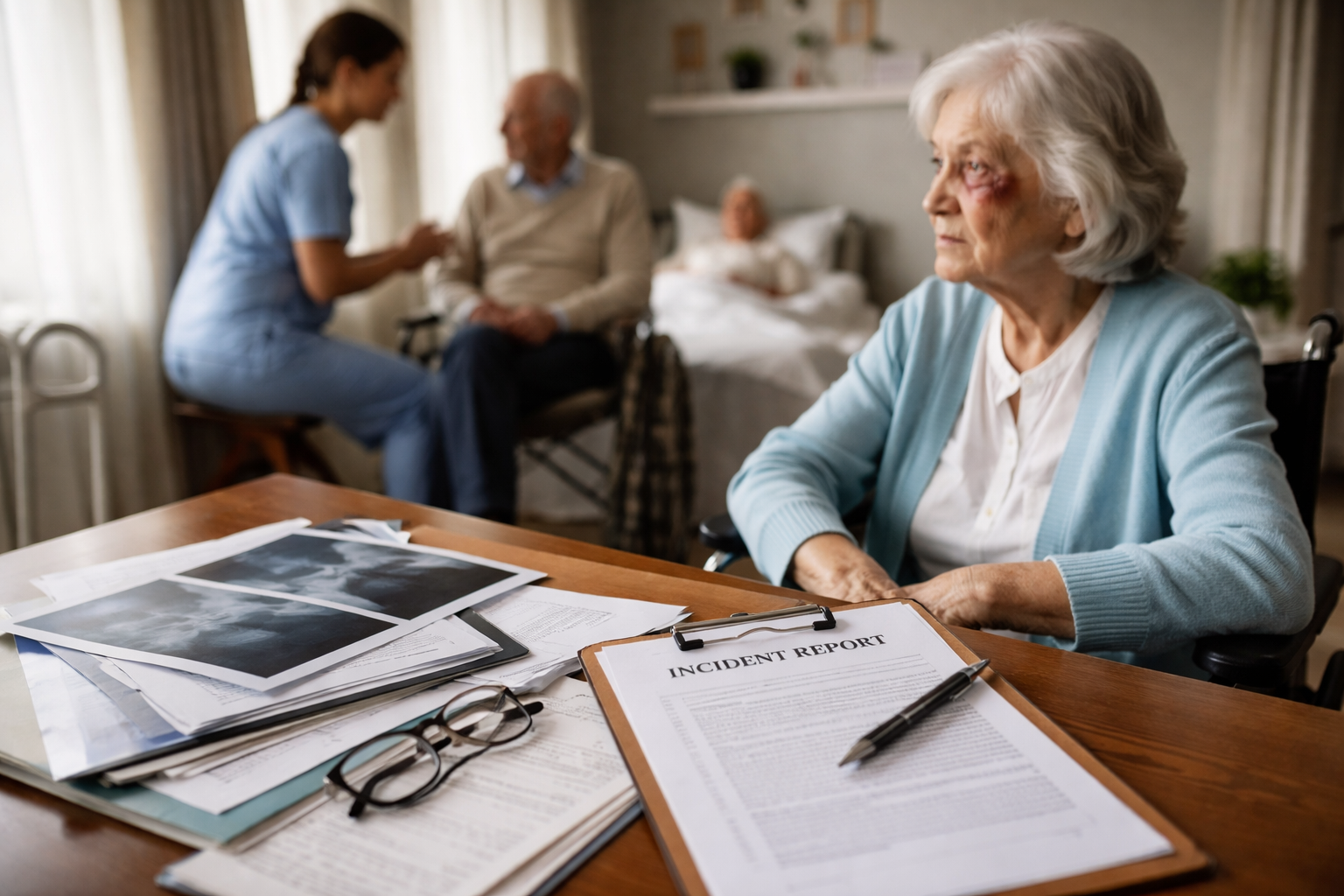
Medical Records
Medical records are often the foundation of a negligence case. These documents may show:
- Delayed or improper treatment
- Missed medications
- Untreated infections
- Progression of preventable conditions
Comparing medical records before and after the suspected negligence can help establish when and how harm occurred.
Incident Reports
Nursing homes are typically required to document accidents and injuries. Request copies of:
- Fall reports
- Injury reports
- Internal investigations
- Staff disciplinary actions
Discrepancies between official reports and observed injuries may strengthen your case.
Photographs and Video Evidence
Visual documentation can be powerful. Take clear photographs of:
- Bedsores
- Bruises
- Cuts or fractures
- Visible injuries
- Unsafe conditions
- Unsanitary living conditions
- Poor hygiene
Photographs and videos should be time-stamped to serve as clear evidence of visible injuries or unsafe living conditions. Video or photo evidence can be one of the most compelling forms of evidence in a nursing home negligence case.
A Detailed Incident Log
If you suspect neglect, begin documenting everything immediately. Include:
- Dates and times of concerning events
- Behavioral changes in your loved one
- Missed medications
- Conversations with staff
- Unexplained injuries
A detailed timeline can reveal patterns of neglect and support your legal claim.
Witness Statements
Statements from:
- Staff members
- Other residents
- Family members
- Visitors
- Medical professionals
can help corroborate your concerns and provide additional insight into the facility’s conduct. Witness statements should be collected from other residents, families, and current or former staff members who may have witnessed neglect. Identify and interview witnesses to collect statements from staff, residents, or visitors who witnessed the neglect.
Expert Testimony
Medical experts and elder care professionals often play a key role in explaining how substandard care caused injury. They can testify that:
- The injury was preventable
- The facility failed to follow accepted standards
- The harm was not simply due to aging or pre-existing conditions
Expert analysis is often essential when proving complex cases of nursing home negligence.
How Peck Law Corporation Can Help
At Peck Law Corporation, we understand how devastating nursing home negligence can be for families. As a dedicated nursing home neglect lawyer, our legal team is committed to investigating, gathering evidence, and advocating for victims. Based in Simi Valley, our experienced elder abuse lawyers focus on representing victims of nursing home abuseand neglect throughout Southern California. We handle cases involving preventable falls, bedsores, medication errors, dehydration, malnutrition, and other forms of nursing home negligence.
Our team works diligently to gather medical records, consult with trusted experts, analyze facility policies, and build compelling cases that hold negligent facilities accountable. We help families pursue justice and are dedicated to seeking justice for harmed residents. Legal action may be the only way to hold responsible parties accountable for nursing home negligence. We are committed to protecting vulnerable seniors and helping families pursue the compensation and justice they deserve.

Contact a Southern California Nursing Home Negligence Lawyer Today
If you’re wondering how to prove nursing home negligence, you don’t have to navigate the process alone. The sooner you take action, the better your chances of preserving critical evidence and protecting your loved one’s rights.
If you suspect nursing home negligence in Southern California, contact Peck Law Corporation today to schedule a legal consultation. Let our experienced nursing home negligence lawyers review your case, explain your options, and help you take the next step toward justice.
Frequently Asked Questions
How do you prove nursing home negligence?
To prove nursing home negligence, you must show that the facility owed a duty of care, breached that duty, and directly caused harm to the resident. Evidence such as medical records, incident reports, photographs, and expert testimony is often required. Establishing clear causation between the negligence and the injury is critical to building a strong case.
What evidence is needed to prove nursing home negligence?
Key evidence includes medical records, facility incident reports, photographs of injuries, witness statements, and documentation of damages. Expert medical testimony may also be necessary to confirm that the injury resulted from substandard care. Thorough documentation significantly strengthens your claim.
How long do I have to file a nursing home negligence claim in California?
In California, nursing home negligence claims are generally subject to specific statutes of limitations that limit the time you have to file a lawsuit. The deadline can vary depending on the circumstances of the case. Speaking with an experienced nursing home negligence lawyer as soon as possible helps protect your rights.
What damages can be recovered in a nursing home negligence case?
After proving nursing home negligence, victims may recover compensation for medical expenses, pain and suffering, emotional distress, and other related costs. In severe cases, families may also pursue wrongful death damages. The specific compensation available depends on the facts of the case.
%20(1).avif)