.avif)
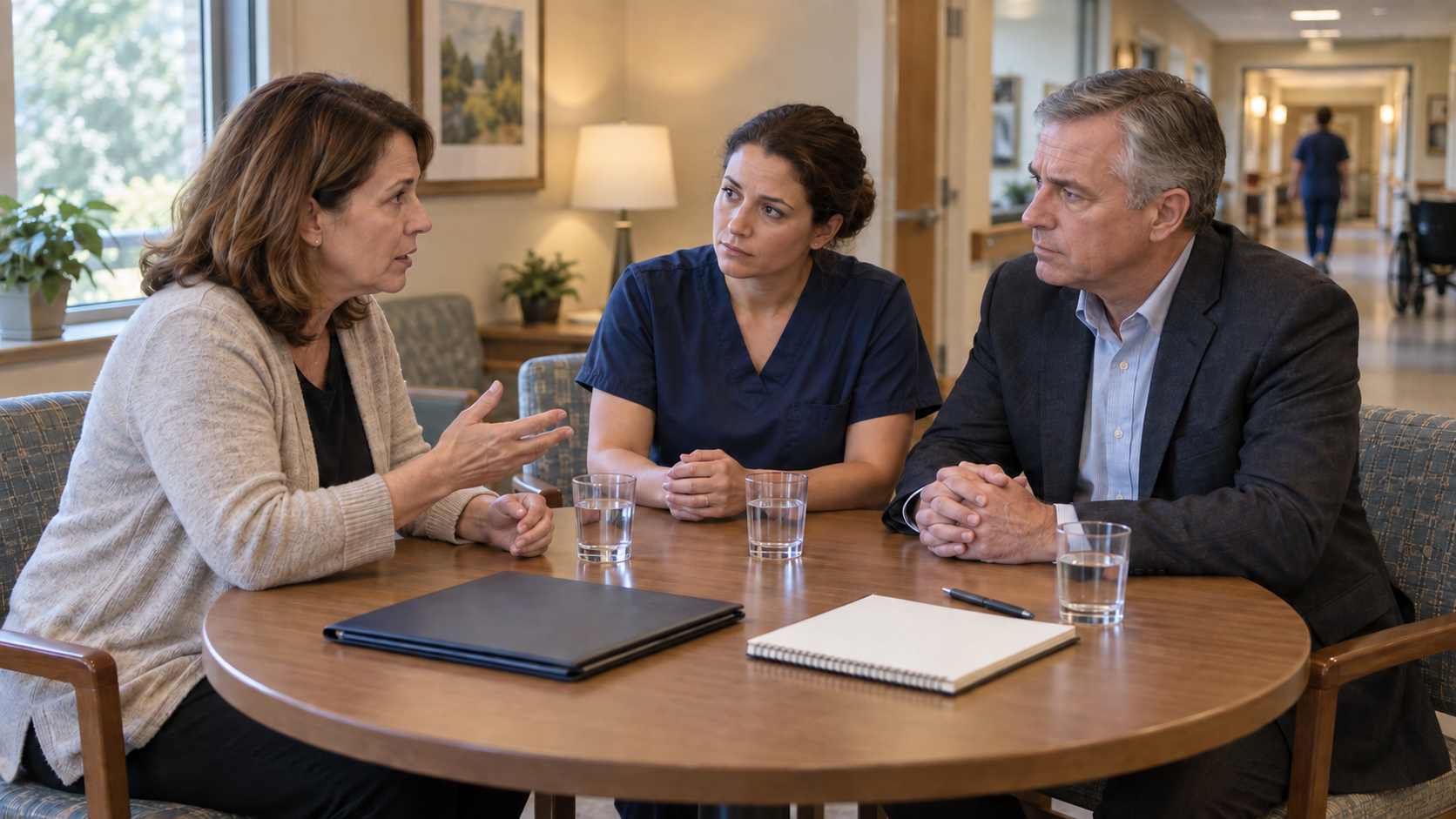
When families place an aging loved one in a nursing home, they expect the facility to provide a safe environment where residents are protected from preventable harm. Unfortunately, abuse in a long-term care setting does not always involve a staff member. Resident-on-resident abuse can occur when one nursing home resident physically, verbally, emotionally, or sexually harms another resident.
These incidents can be particularly complicated because residents may have dementia, cognitive impairments, behavioral conditions, or other medical issues that affect their actions. However, that does not necessarily relieve a nursing home of responsibility. When a facility knew or reasonably should have known that one resident posed a risk to another and failed to take appropriate precautions, the facility may potentially be held liable for resulting injuries.
What Is Resident-on-Resident Abuse?
Resident-on-resident abuse describes harmful conduct committed by one nursing home resident against another. Federal nursing home requirements recognize that residents have the right to be free from abuse, and the Centers for Medicare & Medicaid Services (CMS) instructs nursing home regulators to evaluate resident-to-resident altercations as possible abuse rather than automatically treating them as ordinary disagreements.
The conduct involved can vary considerably. Examples may include:
- Hitting, kicking, pushing, punching, or scratching another resident
- Threatening or intimidating another resident
- Persistent verbal harassment or aggressive behavior
- Entering another resident's room and refusing to leave
- Unwanted touching or sexual contact
- Taking another resident's possessions
- Repeated bullying or emotional mistreatment
- Using a wheelchair, walker, or other object to injure another resident
- Targeting a resident who is physically or cognitively unable to defend themselves
Not every argument, accidental collision, or disagreement between nursing home residents constitutes abuse. The circumstances surrounding the incident, the behavior involved, the residents' conditions, and the facility's response all matter when determining whether abuse occurred and whether the nursing home failed in its responsibilities.

Why Does Resident-on-Resident Abuse Happen in Nursing Homes?
Nursing homes bring together residents with very different medical conditions, cognitive abilities, personalities, and behavioral needs. Some residents may have dementia, Alzheimer's disease, traumatic brain injuries, psychiatric conditions, or other impairments that can contribute to confusion, agitation, wandering, impulsivity, or aggression.
Potential contributing factors can include:
- Cognitive decline or dementia-related behaviors
- Confusion about rooms, possessions, or other residents
- Prior aggressive or threatening behavior
- Inadequately treated pain or discomfort
- Medication-related behavioral changes
- Mental health conditions
- Disagreements between roommates
- Overstimulating or crowded environments
- Inadequate staffing or supervision
- Failure to recognize escalating behavior
- Inappropriate placement of residents with incompatible needs
These circumstances can make resident behavior difficult to predict in some cases. However, nursing homes are responsible for assessing their residents' individual needs and taking reasonable steps to provide a safe care environment.
Can a Nursing Home Be Liable for Resident-on-Resident Abuse?
Potentially, yes. A nursing home is not automatically liable every time one resident unexpectedly injures another. The central issue is often whether the facility knew or should reasonably have known about a danger and whether it responded appropriately.
Federal administrative decisions concerning resident-on-resident incidents have recognized that a facility's responsibility does not extend to every completely unforeseeable act by another resident. At the same time, nursing homes are expected to protect residents from reasonably foreseeable risks and respond appropriately when warning signs exist.
For example, liability may become an issue when a facility was aware that a resident had previously displayed aggressive behavior but failed to increase supervision or modify the resident's care plan. Similarly, a facility may face scrutiny if repeated incidents occurred between two residents yet staff continued to place them together without adequate precautions.
Determining liability generally requires reviewing what happened before the incident—not simply what staff did afterward.
Situations That May Point to Nursing Home Negligence
A resident-on-resident attack can sometimes be an isolated and genuinely unpredictable event. In other situations, evidence may show that the incident followed weeks or months of warning signs that were not adequately addressed.
Several types of facility failures may be relevant when evaluating a potential case.
Failure to Properly Assess a Resident
Nursing homes should evaluate residents when they are admitted and continue assessing them as their conditions change. Behavioral issues, cognitive impairment, aggressive tendencies, wandering, and other risk factors may need to be incorporated into individualized care planning.
If a resident has a documented history of aggression but the facility does not appropriately account for it, other residents could be placed at unnecessary risk.
Failure to Respond to Prior Incidents
Previous altercations can be important warning signs. A resident who has repeatedly threatened, pushed, struck, or harassed other residents may require additional supervision or changes in care.
A nursing home that repeatedly overlooks escalating behavior may eventually face questions about whether a later attack was preventable.
Inadequate Staffing or Supervision
Nursing home staff cannot intervene in dangerous behavior they do not see. When a facility is inadequately staffed, residents may spend long periods without sufficient supervision, particularly in hallways, common areas, dining rooms, or residential wings.
Insufficient staffing may also delay responses after an altercation begins.
Failure to Update a Care Plan
Care plans should reflect changing medical and behavioral needs. New episodes of aggression, wandering, disorientation, or conflict with other residents may require adjustments.
Depending on the circumstances, appropriate interventions might involve increased monitoring, room changes, behavioral evaluations, medical assessments, environmental modifications, or other safety measures.
Inappropriate Roommate or Resident Placement
Some residents may simply be incompatible. If a facility knows that two roommates have an ongoing pattern of conflict, leaving them together without adequate intervention could create an avoidable danger.
Likewise, facilities should consider whether particularly vulnerable residents are being exposed to individuals known to engage in aggressive or intrusive behavior.
Failure to Investigate or Report Abuse
A nursing home's responsibilities do not end when an incident occurs. Facilities may have obligations to protect the alleged victim, investigate what happened, document the incident, and make required reports to government or law-enforcement authorities.
California specifically requires facilities to follow reporting requirements involving certain resident-on-resident abuse incidents, including incidents involving residents diagnosed with dementia.
Warning Signs Families Should Watch For
Victims of resident-on-resident abuse may not always be able or willing to explain what happened. Residents with dementia, communication difficulties, or fear of retaliation can have particular difficulty reporting mistreatment.
Families should therefore pay attention to unexplained physical and behavioral changes, including:
- Bruises, cuts, scratches, or swelling
- Falls or fractures without a clear explanation
- Torn or damaged clothing
- Unexplained genital injuries or sexually transmitted infections
- Sudden anxiety around a particular resident
- Fear of being left alone
- Refusal to enter certain rooms or common areas
- Changes in sleep or appetite
- Increased agitation, withdrawal, or depression
- Repeated requests to change rooms
- Personal belongings that repeatedly disappear
- Conflicting explanations from facility staff about an injury
A single symptom does not necessarily prove abuse. A pattern of unexplained injuries, behavioral changes, or inconsistent explanations, however, deserves closer attention.
What Should Families Do After Suspected Resident-on-Resident Abuse?
When a loved one may have been injured by another nursing home resident, protecting their immediate health and safety should come first.
Families may want to document as much information as possible, including photographs of visible injuries, dates of incidents, names of witnesses, conversations with facility employees, and changes in the resident's physical or emotional condition.
Important evidence may include:
- Medical records
- Nursing notes
- Care plans
- Incident reports
- Staffing schedules
- Behavioral assessments
- Prior complaints involving the other resident
- Surveillance footage
- Witness statements
- Internal facility communications
- Records documenting previous altercations
Families can also report suspected nursing home abuse to appropriate regulatory authorities. If someone faces an immediate threat of serious injury, emergency services or law enforcement may also need to be contacted.
Because documents, memories, video recordings, and other evidence can become more difficult to obtain over time, families considering legal action may benefit from speaking with a nursing home abuse attorney promptly.
What Legal Options May Be Available?
Legal options depend heavily on the facts surrounding the incident. A case involving resident-on-resident abuse is often not simply about whether the other resident acted improperly. It may involve determining whether the nursing home failed to protect a vulnerable individual from a known or reasonably foreseeable danger.
Depending on the circumstances, potential legal claims may involve negligence, nursing home neglect, elder abuse, violations of residents' rights, or other causes of action available under California law.
California's Elder Abuse and Dependent Adult Civil Protection Act provides civil protections for qualifying elders and dependent adults, while nursing home residents also have rights intended to protect them from abuse and unsafe care.
Potential compensation in an appropriate case may include damages related to:
- Medical treatment
- Hospitalization
- Rehabilitation
- Physical pain
- Emotional distress
- Loss of quality of life
- Other losses connected with the injuries
When resident-on-resident abuse contributes to a resident's death, surviving family members may also need to determine whether grounds exist for a wrongful death or related claim.
Every case is different, and the existence of an injury alone does not establish that a nursing home is legally responsible. A detailed investigation is generally necessary to establish what the facility knew, when it knew it, what precautions were available, and whether appropriate action was taken.
How an Attorney Can Investigate Facility Liability
One of the most important questions in these cases is whether the incident could reasonably have been prevented.
An experienced nursing home abuse attorney can investigate beyond the facility's initial explanation and examine evidence such as prior behavioral incidents, assessments, care plans, staffing records, witness testimony, medical documentation, surveillance footage, and regulatory records.
An investigation may seek answers to questions such as:
- Did the aggressive resident have a history of similar behavior?
- Had employees previously documented threats or altercations?
- Did family members or other residents complain?
- Were staff members following the resident's care plan?
- Was adequate supervision available?
- Did the facility appropriately separate residents after earlier conflicts?
- Were behavioral changes medically evaluated?
- Did administrators know that additional precautions were necessary?
- Were legally required reports made after the incident?
- Did the facility take meaningful steps to prevent another occurrence?
The answers can help determine whether an incident was genuinely unforeseeable or whether failures in care, supervision, staffing, or management allowed preventable harm to occur.
Peck Law Corporation Represents Victims of Nursing Home and Elder Abuse in Southern California
Peck Law Corporation is based in Simi Valley, California, and represents individuals and families in elder abuse, nursing home abuse, neglect, personal injury, and related cases throughout Southern California. Our attorneys help families investigate serious injuries, determine how they occurred, identify potentially responsible parties, and pursue appropriate legal remedies when a care facility may have failed to protect a resident.
For injury-related matters, including nursing home and elder abuse cases, Peck Law Corporation works on a contingency fee basis. That means clients do not pay attorney's fees upfront, and the firm is paid only when compensation is recovered. Peck Law Corporation does not handle financial abuse cases. Our elder abuse representation is focused on injury-related cases involving physical abuse, neglect, nursing home abuse, and other forms of harm.
Suspect Resident-on-Resident Abuse? Contact Peck Law Corporation for a Free Consultation
A nursing home resident should not have to live in fear of being attacked, threatened, harassed, or otherwise harmed by another resident. Although not every incident can be anticipated, nursing homes have an important responsibility to recognize foreseeable dangers, appropriately supervise residents, respond to warning signs, and take reasonable measures to protect the people entrusted to their care.
If your loved one suffered serious injuries because of suspected resident-on-resident abuse, there may be more to the incident than the facility initially discloses. Contact Peck Law Corporation today for a free legal consultation. Our experienced nursing home abuse and elder abuse lawyers can review the circumstances surrounding your loved one's injuries, investigate whether the facility failed to provide appropriate protection, and explain the legal options that may be available to your family.
This article is provided for general informational purposes and does not constitute legal advice. The facts and legal issues involved in nursing home abuse cases vary, and families should consult an attorney regarding their individual circumstances.
Frequently Asked Questions
Can a nursing home be held liable for resident-on-resident abuse?
A nursing home may be held liable if it knew or reasonably should have known that a resident posed a danger and failed to take appropriate steps to protect others. Liability often depends on whether the harm was foreseeable and whether the facility provided adequate supervision, care planning, and intervention.
What are common warning signs of resident-on-resident abuse?
Warning signs may include unexplained bruises, cuts, fractures, torn clothing, sudden fear of another resident, withdrawal, anxiety, or changes in behavior. Families should also pay attention to repeated incidents, conflicting explanations from staff, or requests from a loved one to change rooms or avoid certain areas.
What evidence may help prove nursing home liability?
Helpful evidence may include medical records, care plans, incident reports, staffing records, behavioral assessments, witness statements, surveillance footage, and documentation of prior complaints or altercations. These materials can help show what the facility knew about a potential risk and whether reasonable precautions were taken.
Can families file a lawsuit after resident-on-resident abuse?
Families may have legal options when resident-on-resident abuse results in injury and the nursing home’s negligence or failure to protect the resident contributed to the harm. An attorney can review the circumstances, investigate the facility’s conduct, and determine whether a viable nursing home abuse, neglect, or personal injury claim may exist.
%20(1).avif)